


Edublog - Personal Qualities That Relate To Employment
Updated: May 3


Personal Qualities That Relate To Employment

What Are Personal Qualities?

Personal qualities are the parts of your character that show who you are. They include the way you think, feel, and act. For example, being honest, kind, punctual, and hard‑working are personal qualities. These qualities affect how you do your job and how you work with other people. Employers cannot always measure them with a test, but they can see them in your behaviour every day.
The Importance Of Having Positive Personal Qualities

Knowing our positive personal qualities is important in many areas of life. When we understand what we are good at, it helps us feel more confident. It also helps us make better decisions about our goals, our relationships, and our work. When we know our strengths, we can use them to solve problems, communicate better, and work well with others.
How Are Personal Qualities Related To Getting A Job?

Personal qualities are important for getting a job because they help employers understand how a person will behave and work in a job. Employers want their workers to have positive personal qualities, like being patient, reliable, responsible or hard‑working. When people understand their own strong personal qualities which relate to employment, they can choose a job that matches their personality.


What Is an Employer?
An employee is a person, company, or organization that hires other people to work for them. The employer provides work, pay, and guidance. They decide what tasks need to be done and who will do them.

What Is an Employee?
An employer is a person who works for another person or a business. The employee agrees to do certain tasks or duties. In return, the employee receives pay, such as an hourly wage or a salary.

How Employees & Employers Work Together?
Employees and employers depend on each other. Employees use their skills and time to help the business succeed. Employers provide jobs, income, and structure. When both sides respect their roles, the workplace runs smoothly, and everyone benefits.
Personal Qualities In The Workplace

Many jobs need similar personal qualities. Employers look for people who are punctual, responsible, and team‑oriented. They also want good communication, flexibility, and attention to detail. In customer jobs, patience and empathy are important. In busy workplaces, time management and problem‑solving matter. Even if your technical skills are strong, personal qualities often make the biggest difference.
Personal Qualities That Employers Want Their Employees To Have

Personal Quality For Employment #1
Calm Under Pressure

Description: A calm‑under‑pressure person stays steady and focused even when a situation becomes busy, stressful, or unexpected.
Why it is important: Staying calm helps employees think clearly, avoid mistakes, and make good decisions during challenging moments.
Example: During a lunch rush, Jay keeps a cool head and continues serving customers quickly and politely.
Personal Quality For Employment #2
Hard Working

Description: A hard‑working person puts in steady effort and always tries their best to complete tasks well.
Why it is important: Employers rely on people who stay committed, push through challenges, and keep improving their work.
Example: Mateo keeps wiping tables, restocking utensils, and helping coworkers even after his assigned tasks are done.
Personal Quality For Employment #3
Reliable

Description: A reliable person can be trusted to do their work and finish tasks on time.
Why it is important: Employers need workers they can count on so the job gets done every day.
Example: Mo finishes every delivery on schedule, even during heavy traffic.
Personal Quality For Employment #4
Organized

Description: An organized person keeps their space, tasks, and time in good order.
Why it is important: Being organized helps employees finish work faster and make fewer mistakes.
Example: Nabila uses a checklist to prepare catering trays, so nothing is missed.
Personal Quality For Employment #5
Productive

Description: A productive person gets a lot of work done in the time available.
Why it is important: High productivity helps the business run smoothly, reduces delays, and shows strong work habits.
Example: Priya prepares all the salad bowls for the lunch shift ahead of schedule while keeping everything neat and accurate.
Personal Quality For Employment #6
A Quick Learner

Description: A quick learner understands new tasks, tools, or instructions quickly.
Why it is important: Workplaces change often, and learning quickly helps employees adapt, take on new responsibilities, and need less supervision.
Example: After being shown how to use the new register only once, Eli is already able to ring up customers confidently.
Personal Quality For Employment #7
Honest

Description: An honest person tells the truth, follows rules, and acts with integrity.
Why it is important: Employers need workers they can trust with money, equipment, customers, and confidential information.
Example: When Ava notices she was given too much change at the register, she reports it to her supervisor right away.
Personal Quality For Employment #8
Responsible

Description: A responsible person takes care of their duties and does what they are expected to do.
Why it is important: Workplaces run better when employees take ownership of their actions and complete tasks without being reminded.
Example: Priya notices a mistake in an order and tells her supervisor right away, then fixes it.
Personal Quality For Employment #9
Polite

Description: A responsible person takes care of their duties and does what they are expected to do.
Why it is important: Workplaces run better when employees take ownership of their actions and complete tasks without being reminded.
Example: Priya notices a mistake in an order and tells her supervisor right away, then fixes it.
Personal Quality For Employment #10
Trustworthy

Description: A trustworthy person can be counted on to follow through, keep commitments, and handle responsibilities safely.
Why it is important: Employers depend on trustworthy staff to manage tasks independently and maintain workplace standards.
Example: When given the keys to open the store, Lena arrives early and completes the opening checklist just as trained.
Personal Quality For Employment #11
Independent

Description: An independent person can work on their own without needing constant reminders or supervision.
Why it is important: Independent workers help supervisors save time and keep operations moving smoothly.
Example: Once shown how to prep ingredients, Noah works through the list on his own and checks off each item as he finishes.
Personal Quality For Employment #12
Punctual

Description: A punctual person arrives on time or early for work, appointments, and meetings.
Why it is important: Being on time shows respect for others, keeps the workplace running smoothly, and helps teams stay on schedule.
Example: Ana always clocks in five minutes early and sets up her station before her shift starts.
Personal Quality For Employment #13
Respectful

Description: A respectful person treats others kindly and listens without interrupting.
Why it is important: Respect helps people work well together and creates a positive and safe workplace.
Example: Diego listens without interrupting and thanks teammates for their help.
Personal Quality For Employment #14
Communicative

Description: A communicative person shares information clearly by speaking or writing.
Why it is important: Good communication helps avoid mistakes and makes teamwork easier.
Example: Lin sends a short update email after each meeting so everyone knows the next steps.
Personal Quality For Employment #15
Team-Oriented

Description: A team‑oriented person works well with others and helps the group reach shared goals.
Why it is important: Many jobs require teamwork, and employees must cooperate to get tasks done.
Example: Sara stays an extra 15 minutes to help close when a co‑worker is behind.
Personal Quality For Employment #16
Adaptable

Description: An adaptable person can handle change and learn new things quickly.
Why it is important: Workplaces often change, and employers need workers who can adjust without stress.
Example: Khiem learns a new point‑of‑sale system in one afternoon and helps train others.
Personal Quality For Employment #17
Problem-Solver

Description: A problem‑solver looks for simple and useful ways to fix issues.
Why it is important: When problems come up, employees who find solutions help the workplace run smoothly.
Example: Omar reorganizes the stockroom so items are easier to find, saving time.
Personal Quality For Employment #18
Detail-Oriented

Description: A detail‑oriented person pays attention to small but important details.
Why it is important: This helps prevent errors, especially in jobs that require accuracy.
Example: Luca double‑checks customer names on labels and prevents mix‑ups.
Important Personal Qualities That Relate To Employment

# | Personal Qualities That Relate To Employment | Definitions |
1 | Accountable | Admits mistakes and works to fix them. |
2 | Adaptable | Adjusts well to new situations and changes. |
3 | Calm Under Pressure | Stays steady and focused during stressful times. |
4 | Coachable | Accepts feedback and uses it to improve. |
5 | Communicative | Shares information clearly with coworkers and customers. |
6 | Creative | Thinks of new ideas and better ways to work. |
7 | Critical Thinker | Looks at information carefully before making decisions. |
8 | Customer‑Focused | Prioritizes customer needs and satisfaction. |
9 | Decision‑Maker | Chooses good options when problems arise. |
10 | Dependable / Reliable | Shows up consistently and completes work well. |
11 | Detail‑Oriented | Notices small details and avoids errors. |
12 | Empathetic | Understands and cares about others’ feelings. |
13 | Ethical | Makes fair and responsible choices. |
14 | Flexible | Willingly handles changing tasks or plans. |
15 | Goal‑Oriented | Works toward clear objectives. |
16 | Hard‑Working | Puts in steady, committed effort. |
17 | Honest | Tells the truth and follows rules. |
18 | Independent | Can work alone without needing direction. |
19 | Initiative‑Maker | Starts tasks early and looks for ways to help. |
20 | Innovative | Tries new methods to improve work. |
21 | Leadership‑Minded | Guides others and sets a positive example. |
22 | Motivated | Shows enthusiasm and drive to succeed. |
23 | Open‑Minded | Accepts new ideas and different viewpoints. |
24 | Organized | Keeps tasks and workspaces neatly arranged. |
25 | Patient | Stays calm when things are slow or difficult. |
26 | Polite | Uses respectful words and actions with everyone. |
27 | Problem‑Solver | Finds solutions when challenges appear. |
28 | Productive | Uses time wisely and completes tasks on schedule. |
29 | Professional | Shows appropriate behaviour, appearance, and attitude. |
30 | Punctual | Arrives on time and meets deadlines. |
31 | Quick Learner | Learns new skills and ideas quickly. |
32 | Resilient | Bounces back after challenges or setbacks. |
33 | Resourceful | Uses available tools and information to get results. |
34 | Respectful | Treats people, property, and ideas with care. |
35 | Safety‑Minded | Works in ways that keep everyone safe. |
36 | Self‑Motivated | Works without needing reminders or supervision. |
37 | Team‑Oriented | Works respectfully with others and shares ideas effectively. |
38 | Trustworthy | Can be counted on with tasks and responsibilities. |
39 | Work‑Ethic Driven | Takes pride in doing high‑quality work. |
40 | Willing to Learn | Open to training, feedback, and new knowledge. |
Personal Qualities Versus Feelings - What's The Difference?

Personal qualities and feelings are not the same. Understanding the difference between personal qualities and feelings is important for success in the workplace.
Personal qualities are traits that stay with us over time and show how we usually act at work, such as being punctual, reliable, or organized.
Feelings are emotions that can change quickly throughout the day, like feeling confident or happy.
Personal Qualities & Feeling Chart

In the chart below, each Personal quality is matched with a feeling to show how they are different.
Personal Qualities | Feelings | How They Are Different |
Punctual | Energized | Punctual describes someone who regularly arrives on time, whereas energized is a feeling of having lots of energy and being ready to act. |
Reliable | Proud | Reliable is a long‑term quality of being trusted, whereas proud is a feeling you have when you do something well. |
Responsible | Motivated | Responsible is your usual habit of taking care of duties, whereas motivated is a feeling of wanting to work or reach a goal. |
Organized | Clear‑minded | Organized is your ongoing way of keeping tasks in order, whereas clear‑minded is a feeling of being focused at a moment in time. |
Polite | Happy | Polite is a steady habit of speaking and acting respectfully, whereas happy is a feeling of joy in the moment. |
Trustworthy | Calm | Trustworthy is a long‑term ability to be counted on, whereas calm is a feeling of peace in a moment. |
Independent | Connected | Independent describes someone who works well on their own, whereas connected is a feeling of belonging with others. |
Productive | Encouraged | Productive means you consistently get tasks done well, whereas encouraged is a feeling that you can keep trying and succeed. |
Hard‑Working) | Hopeful | Hard‑working is a steady effort to do tasks well, whereas hopeful is a feeling that good things may happen. |
Honest | Interested | Honest is a lasting trait of telling the truth, whereas interested is a moment‑to‑moment feeling of wanting to pay attention. |
Calm Under Pressure | Supported | Calm under pressure describes someone who stays steady when things get stressful, whereas supported is a feeling of being helped or reassured. |
A Quick Learner | Inspired | A quick learner is a trait of picking up new skills fast, whereas inspired is a feeling of wanting to take action or improve. |
Steps To Getting A Job Interview

A job interview is a meeting where an employer talks with you to see if you are the right person for the job. They ask about your experience, skills, and personal qualities. To be asked to go to a job interview, you usually need to do the following steps:
Step #1
Find a job posting that fits your skills
Look online, in newspapers, or in the community for jobs. Choose a job that matches your experience, education, or interests.
Step #2
Read the job description carefully
Read all the details about the job duties and requirements. Make sure you understand what the employer wants.
Step #3
Prepare or update your résumé and cover letter
Write a résumé that shows your work experience, education, and skills. Write a short cover letter to explain why you want the job.
Step #4
Tailor your application to the job
Change your résumé and cover letter to match the job posting. Use important keywords that the employer uses in the job description.
Step #5
Apply before the deadline and follow the instructions
Submit your application on time. Follow all steps, such as uploading documents or filling out forms.
Step #6
Keep your phone and email ready for messages
Check your phone and email every day. Employers may contact you quickly.
Step #7
Respond quickly and politely when the employer contacts you
If an employer sends a message or calls you, answer as soon as possible. Be polite and professional.
Step #8
Complete any online tests or tasks they request
Some employers ask you to take a short test or complete a task. Do it carefully and send it back by the deadline.
Step #9
Confirm the interview time and location
When the employer gives you an interview time, send a short message to confirm. Make sure you know where to go or how to join the video call.
Top 10 Job Interview Questions & Possible Answers

Job Interview Question #1:

Possible Answers:
Answer A: “I am a hard‑working person. I like helping people and learning new skills.”
Answer B: “I live nearby. I am friendly, and I enjoy working with others.”
Answer C: “I am responsible and calm. I like to stay organised and do my best.”
Job Interview Question #2:

Possible Answers:
Answer A: “I want to work here because the company has a good reputation.”
Answer B: “I like this environment, and I want to be part of this team.”
Answer C: “I want to learn and grow, and I think this is a good place for me.”
Job Interview Question #3:

Possible Answers:
Answer A: “My strengths are that I am punctual and reliable.”
Answer B: “I work well with people and follow instructions.”
Answer C: “I stay positive, and I finish my tasks on time.”
Job Interview Question #4:

Possible Answers:
Answer A: “I am shy, but I am practising speaking more.”
Answer B: “I sometimes work too slowly, but I am learning to manage my time.”
Answer C: “I get nervous in new situations, but I take deep breaths and stay calm.”
Job Interview Question #5:

Possible Answers:
Answer A: “At school, my partner was absent, so I finished the project alone.”
Answer B: “At work, a customer was confused. I explained things clearly, and they were happy.”
Answer C: “One day I forgot my lunch, so I made a fast plan and took a short break to buy food.”
Job Interview Question #6:

Possible Answers:
Answer A: “I worked with a team to clean a room. We shared the tasks and finished quickly.”
Answer B: “In class, we worked in groups. I helped my group finish the assignment.”
Answer C: “At my old job, we prepared orders together. We talked and helped each other.”
Job Interview Question #7:

Possible Answers:
Answer A: “I take a deep breath and stay calm.”
Answer B: “I write a list and do one thing at a time.”
Answer C: “I ask for help when I need it and keep a positive attitude.”
Job Interview Question #8:

Possible Answers:
Answer A: “I am punctual, respectful, and responsible.”
Answer B: “I am friendly, patient, and I work well with others.”
Answer C: “I am organised, hard‑working, and I learn quickly.”
Job Interview Question #9:

Possible Answers:
Answer A: “I want more hours and more opportunities.”
Answer B: “I moved to a new city, so I need a new job.”
Answer C: “The company changed schedules, and I need a different shift.”
Job Interview Question #10:

Possible Answers:
Answer A: “Yes. What are the next steps in the hiring process?”
Answer B: “Yes. When would the job start?”
Answer C: “Yes. Can you tell me more about the training?”
Personal Qualities In A Job Interview

One common interview question is about personal qualities. Employers ask this to learn if a person is a good fit for the job. They want to understand your personality and character. When you can clearly talk about your positive qualities, you show confidence and readiness for the role. This also helps you stand out from other candidates and makes employers feel more confident about hiring you.
A Job Interview Scenario

Candidate: “Um, I’m not sure...”
If a candidate cannot answer, the employer may think the candidate is not prepared or does not understand the job. The interview may become awkward. A better way is to give three qualities and a short example for each.
To avoid this problem, candidates should prepare before the interview. A better way to answer is to name three personal qualities and give a short example for each one. This helps the employer clearly see the candidate’s skills and attitude.
Here is an example of a stronger answer:
“I am reliable, because I always arrive at work on time and finish my tasks.I am a good team worker, and I like to help others when they need support.I am organized, so I can manage my time well and meet deadlines.”
This kind of answer sounds confident and clear. It shows the employer that the candidate understands their own strengths and can explain them in a professional way.
***If you forget your personal qualities during the interview, take a breath and think of one recent situation where you showed a good quality.
Ways Employers Ask About Personal Qualities During A Job Interview

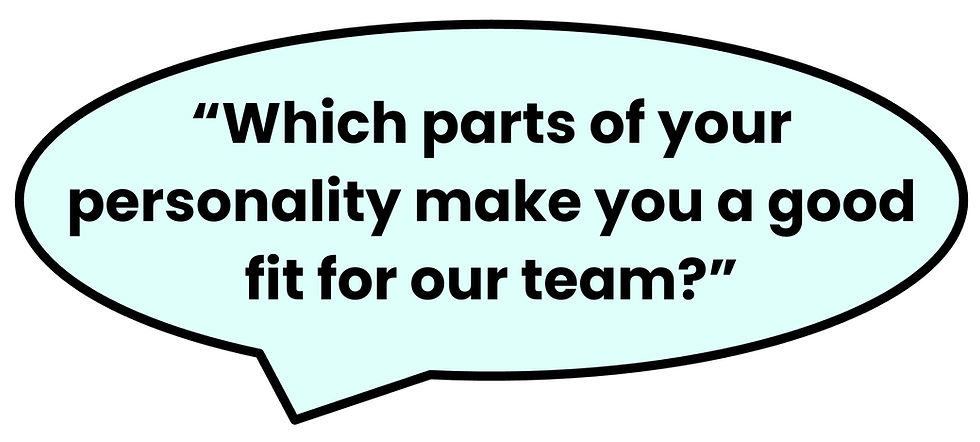
Here are example job interview questions of how an employer might ask an employee to talk about their personal qualities during a job interview:
Job Interview Question which relates to personal qualities #1:

Possible Answer:
“I am reliable, organized, and punctual. I arrive on time, plan my tasks well, and put effort into everything I do. These qualities help me do my job well and support the team.”
Job Interview Question which relates to personal qualities #2:

Possible Answer:
“Being patient and motivated helps me succeed. I keep trying even when work is busy, and I stay focused on my responsibilities.”
Job Interview Question which relates to personal qualities #3:

Possible Answer:
“I am respectful and responsible. I follow instructions, treat others kindly, and take my work seriously.”
Job Interview Question which relates to personal qualities #4:
Possible Answer:
“I am friendly and cooperative. I enjoy working with others, sharing ideas, and helping my coworkers when needed.”
Job Interview Question which relates to personal qualities #5:

Possible Answer:
“I am proud of being dependable. When I am given a task, I complete it on time and do it carefully.”
Job Interview Question which relates to personal qualities #6:

Possible Answer:
“My problem-solving skills and calm attitude have helped me. I stay positive and look for solutions instead of getting upset.”
Job Interview Question which relates to personal qualities #7:

Possible Answer:
“My coworkers would say I am kind and helpful. I listen to others and try to support the team.”
Job Interview Question which relates to personal qualities #8:

Possible Answer:
“I bring honesty and a strong work ethic. I do my best every day and follow workplace rules.”
Job Interview Question which relates to personal qualities #9:

Possible Answer:
“I am punctual and organized. I finish my work on time and take responsibility for my duties.”
Job Interview Question which relates to personal qualities #10:

Possible Answer:
“Good communication and respect help me build strong relationships. I listen carefully and speak politely with others.”
Job Interview Questions About Personal Qualities
Concluding Thoughts
Personal qualities are a key part of success at work. They help you get interviews, do well on the job, and grow your career. Employers look for people who are punctual, reliable, respectful, and good communicators. In interviews, be ready to name your top qualities and give short examples. In daily work, show these qualities through your actions. Small habits, like being on time, build trust, help your team, and keep opportunities open for your future.

Click below for a lesson & activities on this topic:


Written by: Nicole WT
Copyright © Learn English with NETOL. All rights reserved.


Comments