



Lesson & Activities - Tenant & Landlord Disputes - 14 Common Tenant Complaints
Updated: May 3


✦ This lesson includes these sections:
☞ PART 1 - Tenant & Landlord Disputes
☞ PART 2 - Methods For Making Complaints
☞ PART 3 - Types Of Homes People Rent
☞ PART 4 - Common Tenant Complaints
☞ VIDEO - 14 Common Tenant Complaints
☞ PART 5 - Conversation Vocabulary For Making Complaints
☞ PART 6 - Requesting Timely Repairs
☞ PART 7 - Concluding Paragraph
✦ Click on each section from above to see it ↑
✦ Click on each title box from below to get back here ↓

Tenant & Landlord Disputes
14 Common Tenant Complaints
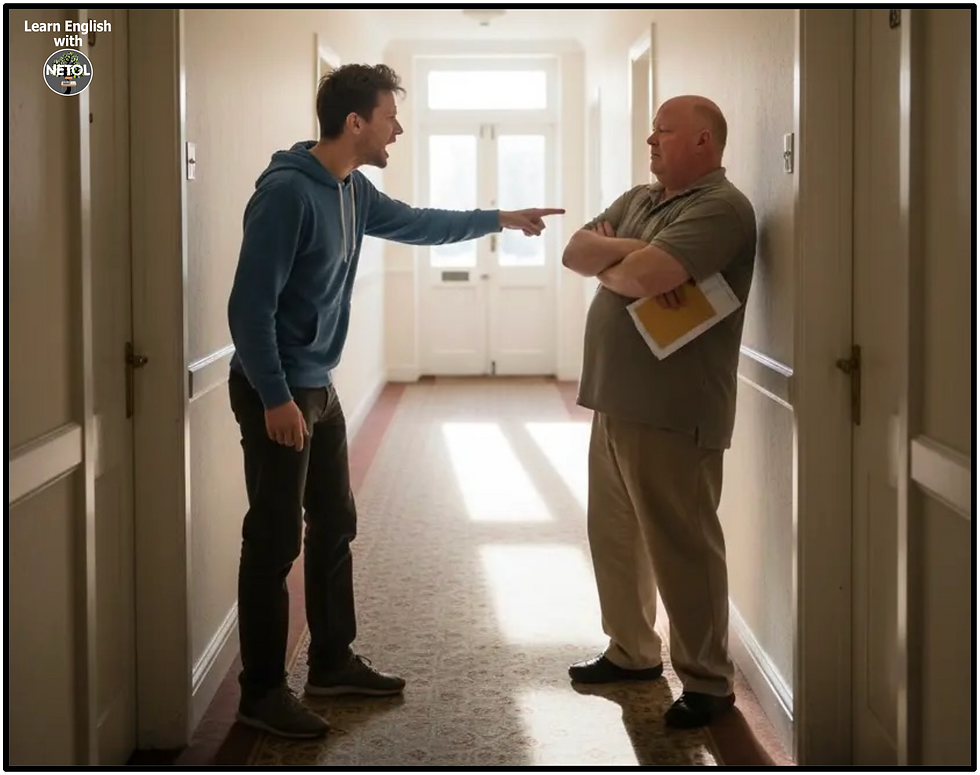

Speaking Activity
Conversation Questions
Instructions:
Listen to and read the conversation questions.
Practice your speaking by answering each question out loud.
See some possible answers to the conversation questions by clicking the side arrows next to each question.
Conversation Questions
1. What does complaining mean?
Complaining means saying that you are not happy about something. It can be about a problem or something that is not fair.
2. How do you think people feel when they complain?
People usually feel upset, angry, or frustrated when they complain. They want something to change.
3. Have you ever complained about anything? If yes, what did you complain about?
Yes, I have. I complained about cold food at a restaurant. I asked the server to warm it up.
4. Can you name a few different ways that people make complaints?
Yes. People can complain by talking to someone in person, writing an email, or calling customer service.
5. What is the difference between a tenant and a landlord?
A tenant is a person who rents a place to live. A landlord is the person who owns the place and rents it to the tenant.
6. What do you think is one common complaint that a tenant might have?
One common complaint that a tenant might have is that something is broken, like the heater or the toilet.

Writing Activity
Pre-Reading Vocabulary
Instructions:
Get a pencil and paper.
Copy the words from below.
Look up the definitions of the words online.
Get to know the definitions of each word
Important Words
Tenant & Landlord Disputes
14 Common Tenant Complaints
tenant
landlord
dispute
complaint
concern
rent
neglected
common areas
issues
unsupervised
unpleasant
pests
invasion
repair

Reading Activity
Tenant & Landlord Disputes
14 Common Tenant Complaints
Instructions:
Read the following passage about Tenant & Landlord Disputes.
Thereafter, listen to the audio - Tenant & Landlord Disputes: 14 Common Tenant Complaints.
Note: Reading out loud when learning a new language is important because it helps you practice your pronunciation. When you speak the words, you can hear how they sound, and this will improve your speaking skills.

Tenant & Landlord Disputes
14 Common Tenant Complaints

A tenant is someone who rents a home from a landlord. The landlord is the person who owns or is in charge of the property. Sometimes, tenants have complaints about their living conditions. Landlords are responsible for addressing and resolving their tenants' complaints.
At times, tenants and landlords have disputes. These disputes are also called disagreements. In a tenant-landlord dispute, the tenant wants the landlord to fix something, but the landlord may not agree to do it, or may take a long time to resolve it.
In this lesson, you will learn about different methods for making complaints, various types of homes that people rent, 14 common tenant complaints, and functional conversational phrases that tenants can use when they are complaining or disputing a problem.

8 Methods for Making Complaints

*Before reading about the 8 different methods for making complaints, look at each picture from above, and try to figure out what each method of complaint is.
Complaining is important because it can help us make things better. People can complain in many different ways. Here are 8 different ways in which people can complain:
Talking in person (face-to-face)

When people talk in person about a problem, they use clear words directly.
Composing an email of complaint
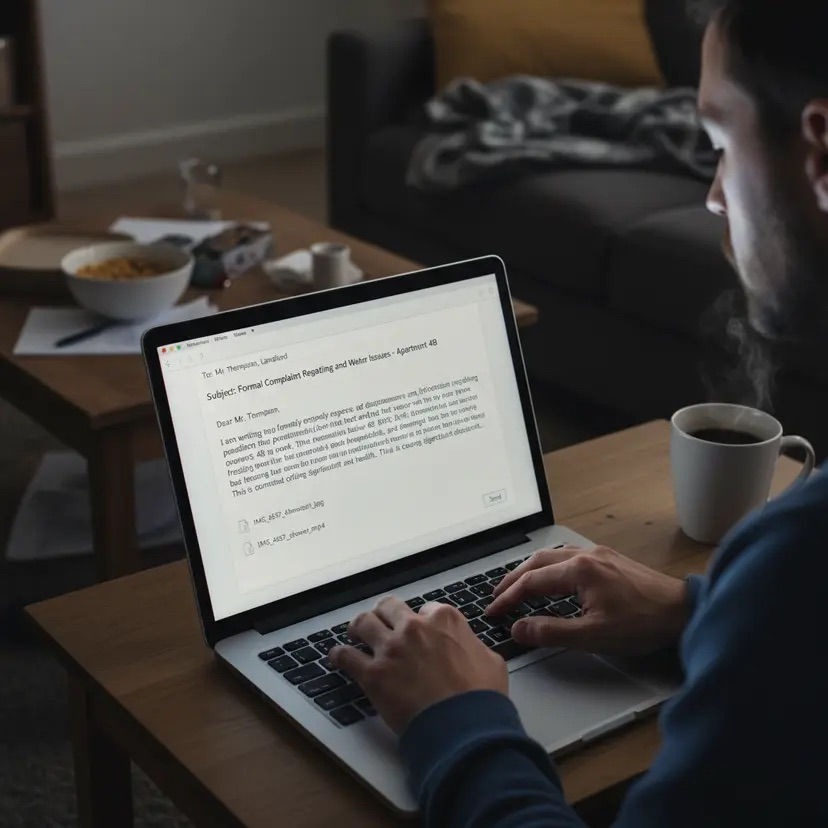
People write an email of complaint when they need to explain a problem.
Writing a letter of complaint

In a letter of complaint, people use respectful and clear language to describe their complaint.
Sending a text message

With a text message, people can quickly share an issue.
Speaking on the phone

Speaking on the phone lets people explain their concern directly.
Filling out an online complaint form

When filling out an online complaint form, people answer specific questions about their issue.
Using social media

By using social media, people can post complaints about their issues in short messages.
Leaving a review on a website

Leaving a review lets people write about their own experience on a website.

Types of Homes That People Rent

*Before reading about the different types of homes that people rent, look at each picture from above, and try to figure out what the name of each type of home is.
There are many different types of homes that people rent. Here are 4 types of homes that people choose to rent:
A single detached house

A single detached house is a home that stands alone and is not connected to any other house. This type of home is perfect for families who want privacy. It has its own yard and walls that don’t touch any other house. You can walk all around it!
A semi-detached house

A semi-detached house is a home that is joined to another house on one side. Imagine two houses that share one wall in the middle. Each side is a separate home, but they are connected like twins. It’s great for neighbours who want to live close together.
A townhouse
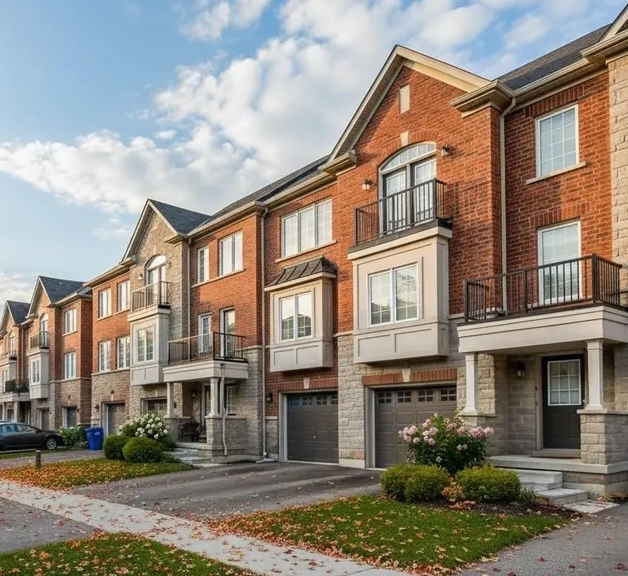
A townhouse is a home that is part of a row of houses joined together. Townhouses are built in a line, and each one shares walls with the houses next to it. They are usually smaller than detached houses and are common in cities.
An apartment building
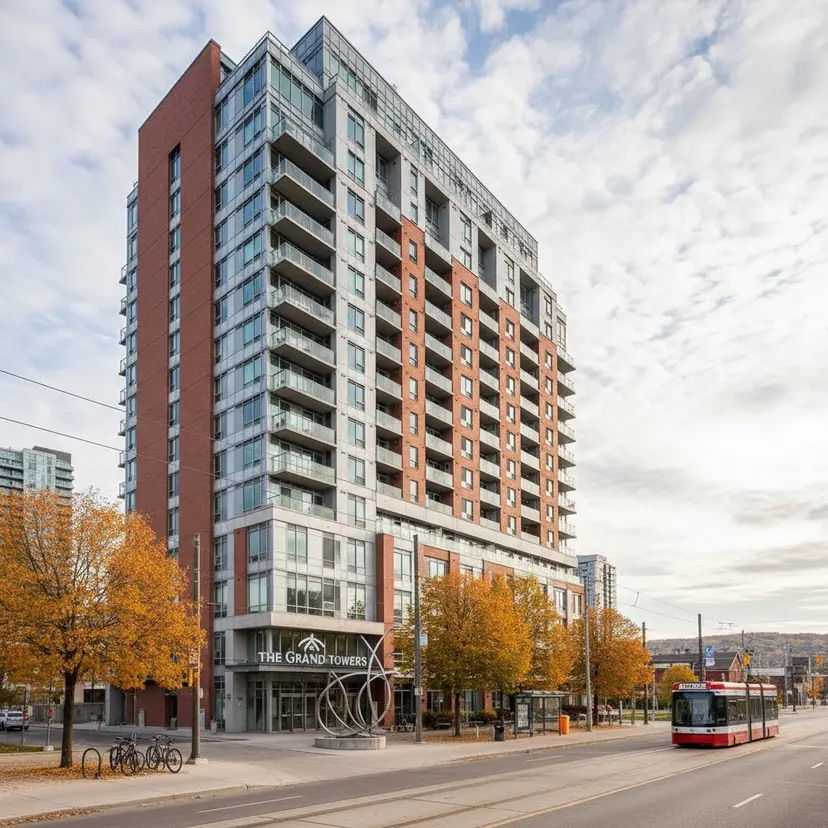
An apartment building is a tall building with many homes inside, called apartments. Each apartment is one home in a big building. People live in separate units, but they share things like hallways, elevators, and sometimes laundry rooms.

14 Common Tenant Complaints

*Before reading about the 14 common tenant complaints, look at each picture from above, and try to figure out what each complaint is.
When tenants have problems in their rented homes, they often need to tell their landlord about what is wrong. Complaining is a way to ask for help with fixing issues. There are 14 common tenant complaints.
Neglected Landscape
Dirty Common Areas
Parking Issues
Noisy Neighbours
Unsupervised Children
Unpleasant Smells
Issues With Animals
Pest Infestations
Inadequate Heating Or Cooling
Maintenance Delays
Damage To Common Areas
Safety Concerns
Privacy Invasion
Difficulty Reaching The Landlord

Common Tenant Complaints

Conversational Vocabulary To Use When Making A Complaint

When tenants have issues, problems, or concerns in their homes, they need to use phrases that explain what is wrong. There are a few common phrases that tenants can use to complain and ask for help politely. Below is a list of common phrases that tenants might use when complaining about different kinds of issues. Each phrase is simple and clear, making it easier for landlords to understand their tenants' concerns.
"I have a complaint."
"There is an issue."
"I have a problem."
"I am worried."
"This is urgent."
"I need help with this problem."
"Please look into this situation."
"Investigate this problem further."
"Please check this out."
"This needs to be repaired."
"I need help with this situation."
"Please let me know when this can be fixed."
"I am not happy with this situation."
"This situation is not good."
"This problem is ongoing."
"This problem needs to be repaired."
"This needs to be resolved as soon as possible."
"This is unacceptable, and the situation must be resolved."
"I feel worried / disappointed / irritated / upset / disgusted / unsafe / angry / outraged / scared / agitated / anxious / concerned / frustrated / bothered."
Requesting Timely Repairs from Your Landlord

It is very important for a tenant to ask a landlord to repair something by a certain date or time because it helps both parties know what to expect. When a repair is scheduled by a specific time, the tenant can plan their day and have the problem repaired at a convenient time. Also, when the landlord schedules a repair date and time, it ensures that complaints and issues are resolved, and it keeps the building well-maintained.
Here are a few different ways a tenant can ask for a repair to be done by a certain date or time:
"Please fix it as soon as possible."
"Please attend to this matter right away."
"Could you repair it by the end of today?"
"I request that the repair be completed by 5 PM today."
"Can you resolve this issue by this afternoon?"
"I need the repair to be finished by this evening."
"Please see to it before noon tomorrow."
"I require that the repair be done by the following day."
"Kindly have it repaired within 24 hours."
"Please address this issue by Friday of this week."
"Please ensure the repair is done by the end of the week."
"Can you take care of it by next month?"
"Can you make sure it is fixed by the agreed date?"
"It is important that the repair is done by the agreed time."
"I ask that you fix the issue by the time we agreed on."

Final Thoughts About Tenant and Landlord Disputes and Common Tenant Complaints
In conclusion, tenant and landlord disputes are important problems that need quick solutions because the problems can affect people's daily living conditions. Tenants should know the common complaints that can arise about living conditions, and they must also learn simple phrases to use when they complain to their landlord. Tenants should also know vocabulary that can help them with requesting timely repairs from their landlords. Furthermore, it is necessary for landlords to listen to their tenants' complaints and fix issues quickly, properly, and respectfully.

Listening Activity
Tenant & Landlord Disputes
14 Common Tenant Complaints
Instructions:
Press the play buttons below.
Listen to the audio files in order from 1 to 2.
Use the reading from above to follow along with the audio files.
Tenant & Landlord Disputes
14 Common Tenant Complaints

Reading, Speaking, Listening & Writing Activity
Common Tenant Complaints & Examples Of Functional Conversational Phrases
Instructions:
Read each one of the 14 common tenant complaints.
Practice your speaking skills by reading the functional conversational phrases out loud.
Listen to each one of the common tenant complaints and pay special attention to the functional conversational phrases of each complaint.
Get a pencil and paper and copy the 14 common tenant complaints.
Select one common tenant complaint that you think is the most serious and create a 4-line dialogue between a tenant and landlord.
14 Common Tenant Complaints & Examples Of Functional Conversational Phrases
Tenant Complaint #1
Neglected Landscape

Neglected Landscape: A neglected landscape means that the outdoor gardens, lawns, and green spaces are not maintained properly. This complaint is common when tenants feel that the outdoor area is untidy and uninviting.
Complaint Example: Tenants might feel very disappointed when the landscape on the property is uncared for. Some examples of the landscape being neglected include the grass not being cut regularly, flower beds, shrubs, and trees being overgrown, and walkways being cluttered with dirt, overgrown weeds, and debris.
Conversational Phrases - Tenant Complaints - Neglected Landscape:
"My garden is overgrown and messy."
"I see weeds everywhere."
"The lawn needs cutting."
"Please fix the landscape."
"The landscape looks very neglected."
Tenant Complaint #2
Dirty Common Areas

Dirty Common Areas: Dirty common areas refer to the shared spaces in a building that are not kept clean. Tenants often complain when hallways, lobbies, or laundry rooms are unclean.
Complaint Example: Tenants may feel disgusted and irritated when dirt and dust accumulate in the lobby, trash is left and not cleaned up in the hallway, stairs are not swept, elevator areas might be grubby, and the shared laundry room is filthy.
Conversational Phrases - Tenant Complaints - Dirty Common Areas:
"There is a lot of mud and dirt in the entrance of the building."
"The hallway carpet is very dirty."
"There is garbage on the floor of the elevator."
"The laundry room is completely filthy."
"Can you please arrange for the property to be properly cleaned as soon as possible?"
Tenant Complaint #3
Parking Issues

Parking Issues: Parking issues arise when there are problems related to reserved or available parking spaces. This complaint is made when tenants cannot find a clear place to park.
Complaint Example: Tenants might feel outraged when they drive home after a long day at work, they get home, and they cannot find a parking spot because someone else is parked in their reserved parking spot. This is a very common and frustrating tenant complaint. Some other parking complaints include the parking lot being too small for all tenants, vehicles continuously blocking entry or exit access, markings on the parking lot may be unclear, and parking areas being poorly organized.
Conversational Phrases - Tenant Complaints - Parking Issues:
"I am unable to find a parking spot on the property."
"My reserved parking spot is always taken by someone else."
"There are not enough parking spots on the property."
"Other vehicles are blocking the entrance to the parking lot every afternoon."
"It is unacceptable that I am unable to find a parking spot when I get home from a long day of work."
Tenant Complaint #4
Noisy Neighbours

Noisy Neighbours: Noisy neighbours can make a home very uncomfortable. This complaint happens when there is too much sound coming from adjacent homes or the common areas.
Complaint Example: Tenants may feel very angry when there are loud noises on the property, such as music that is playing loudly late at night, neighbours having noisy family gatherings, neighbours shooting fireworks very late at night, footsteps, and loud voices that are heard clearly.
Conversational Phrases - Tenant Complaints - Noisy Neighbours:
"I am unable to sleep at night because of the loud noises."
"My neighbour plays music very loudly at night."
"I cannot work from home because my neighbours' TV is always so loud."
"My refrigerator is making a very loud and obnoxious noise."
"I hear loud banging noises every morning due to my neighbour running on a treadmill."
Tenant Complaint #5
Unsupervised Children

Unsupervised Children: Unsupervised children in common areas can create safety and cleanliness issues. Tenants may complain when children are left to play without adult supervision.
Complaint Example: Some tenants may feel agitated when children are playing and making lots of noise in the hallways, leaving toys scattered in the corridor, which can cause a tenant to accidentally fall, drawing on the walls of the property with crayons and markers, and playing a game called Ding Dong Ditch where kids disturb tenants by knocking on doors and running away repeatedly.
Conversational Phrases - Tenant Complaints - Unsupervised Children:
"The hallway is messy because there are toys everywhere."
"The kids are colouring all over the walls of the corridor."
"The children are yelling and screaming in the hallways all day long."
"The kids keep knocking on my door and running away."
"Please ask the children's parents to watch them."
Tenant Complaint #6
Unpleasant Smells

Unpleasant Smells: Unpleasant smells are a common complaint when bad odours make a building uncomfortable. This can happen due to poor waste management, smoking, or lingering food smells.
Complaint Example: Tenants might feel bothered by persistent smells. These smells might be cooking smells that fill the hallways, smoking smells from a neighbour who smokes, musty smells that come from damp areas on the property, pet smells from neighbours that have animals, and garbage smells from garbage that is left in the hallway.
Conversational Phrases - Tenant Complaints - Unpleasant Smells:
"The hallway smells like garbage all the time."
"There is a strong, bad odour in the building."
"I notice that there is an unpleasant smell in the hallway."
"I think the neighbour next door is smoking because everything smells like smoke."
"Could you please check where the bad smell is coming from?"
Tenant Complaint #7
Issues With Animals

Issues with Animals: Issues with animals occur when pets or stray animals cause disturbances in the living environment. Tenants might complain about excessive noise, odours, or mess from animals.
Complaint Example: Tenants may feel irritated by loud barking noises from dogs, and this can affect the peace in the building. Pets such as cats, dogs, bunnies, guinea pigs, ferrets, hamsters, birds, snakes, or mice that are not properly cared for by their owners can cause very bad smells and other disturbances on the property, which the landlord would be obligated to mediate and resolve.
Conversational Phrases - Tenant Complaints - Issues With Animals:
"I hear barking all day and all night long."
"The dog is making too much noise."
"Dog waste is not being cleaned up around the property."
"The smell from the dirty cat litter that is not being cleaned up is too strong."
"The animals are running around freely and disturbing the hallway area."
Tenant Complaint #8
Pest Infestations

Pest Infestations: Pest infestations are a serious concern when insects or rodents invade a living space. This complaint is made when tenants are worried about hygiene and health.
Complaint Example: Tenants may feel disgusted if cockroaches or other bugs are spotted in common areas; ants invade food storage areas such as kitchens, or rodents might be seen throughout the property. Infestations are a serious complaint that landlords must take seriously and resolve the issue as soon as possible. These types of complaints can cause tenants sleepless nights, and repeated pest problems can lead to health concerns.
Conversational Phrases - Tenant Complaints - Pest Infestations:
"I saw a rat running around in the hallway."
"I found cockroaches in my bathroom."
"There are many ants in my kitchen and I cannot get rid of them."
"I am worried about this infestation."
"Please call pest control."
"This situation with pests is a health issue."
Tenant Complaint #9
Inadequate Heating Or Cooling

Inadequate Heating or Cooling: Inadequate heating or cooling creates discomfort for tenants in extreme weather. This complaint occurs when the systems in a home do not work as expected.
Complaint Example: Tenants might feel agitated when the heater does not warm the property up effectively during the cold winter months, or when the air conditioner does not cool off the property effectively during the hot summer months.
Conversational Phrases - Tenant Complaints - Inadequate Heating Or Cooling:
"The heater does not warm my apartment."
"It is too cold in my apartment because the heater is not working."
"The air conditioner does not cool my apartment."
"The AC stopped working, and now I feel uncomfortable in my home because I am too hot."
"Please fix this situation as soon as possible."
Tenant Complaint #10
Maintenance Delays

Maintenance Delays: Maintenance delays refer to situations where necessary repairs are not carried out in a timely manner. Tenants complain when problems linger without a solution.
Complaint Example: Tenants might feel concerned when they have maintenance issues not repaired or replaced for days or weeks. Some important maintenance issues include a leaky faucet, a broken window, a faulty appliance, a broken door lock, or a moldy wall. It can be very frustrating and concerning when these maintenance issues are delayed or ignored by the landlord.
Conversational Phrases - Tenant Complaints - Maintenance Delays:
"This repair is taking too long."
"I called you two days ago to tell you that my refrigerator stopped working."
"I informed you that my door lock was broken days ago."
"I have been complaining about my leaky faucet for weeks."
"I told you that my window broke days ago. Your delayed response is unacceptable."
Tenant Complaint #11
Damage To Common Areas

Damage to Common Areas: Damage to common areas includes any form of destruction or defacement in shared spaces. This complaint is made when there is visible damage that is not repaired.
Complaint Example: Tenants might feel very frustrated when they have to deal with damage to common areas such as walls that have graffiti, playground equipment or furniture in shared areas that are broken, elevators are out of service, the residential swimming pool is unmaintained, the flooring in hallways is damaged, and lighting fixtures are not functioning.
Conversational Phrases - Tenant Complaints - Damage To Common Areas:
"The light in the hallway is not turning on."
"The elevator stopped working."
"The hallway wall needs to be painted."
"This broken playground is a safety hazard."
"The hallway carpet should be replaced."
Tenant Complaint #12
Safety Concerns

Safety Concerns: Safety concerns arise when tenants feel that the building is not secure enough for them. They complain when potential hazards exist that threaten their well-being.
Complaint Example: Tenants might feel scared when there is no lighting in the entrance areas, no lighting in hallways due to burnt out lights, broken locks and windows within the property, or when emergency exits are blocked. Tenants should contact their landlord as soon as possible if they have any safety concerns.
Conversational Phrases - Tenant Complaints - Safety Concerns:
"The entrance to the building is poorly lit."
"The broken entrance lock is worrying me."
"The emergency exits are blocked on my floor."
"The entrance door is left unlocked, and this concerns me."
"I do not feel safe on the property because of this situation."
Tenant Complaint #13
Privacy Invasion

Privacy Invasion: Privacy invasion occurs when tenants feel that their personal space is not respected. This complaint appears when there is too much intrusion into private areas.
Complaint Example: Tenants might feel anxious and irritated when their privacy is being invaded by the landlord if the landlord makes many unscheduled visits without notice. Another privacy invasion situation is cameras being placed inappropriately throughout the property.
Conversational Phrases - Tenant Complaints - Privacy Invasion:
"Please let me know ahead of time when you come by."
"I am requesting that you make scheduled visits to the property."
"Please do not enter the apartment without asking me first."
"I prefer that you call first before coming in."
"Your unscheduled visits make me feel nervous."
Tenant Complaint #14
Difficulty Reaching The Landlord

Difficulty Reaching The Landlord: Difficulty reaching the landlord is a common complaint when tenants cannot get in touch with the property owner. This creates frustration and feelings of neglect.
Complaint Example: Tenants might feel outraged when they try to contact the landlord and their calls go unanswered, their emails and text messages are not replied to, they receive no follow-up communication, and setting up meetings with the landlord is very hard to arrange.
Conversational Phrases - Tenant Complaints - Difficulty Reaching The Landlord:
"I cannot reach you by phone."
"My emails go unanswered."
"I need a way to contact you quickly."
"I feel ignored in my concerns."
"Please provide better communication."

Listening, Reading & Writing Activity
Dialogue Matching Exercise
Instructions:
Get a pencil and paper and make a list from 1 to 5, which represents the 5 dialogues from below.
Read each one of the 5 dialogues between a tenant and a landlord.
Use the 14 common tenant complaints chart to decide which dialogue each tenant complaint describes.
After reading each dialogue, practice your writing by writing a complaint next to each number that you wrote.
Check your answers by clicking on the side arrows that is next to each dialogue.
Common Landlord & Tenant Disputes
Which common tenant complaint does each dialogue describe?

Dialogue #1
Tenant: "Hello, I would like to talk about a problem in my building."
Landlord: "Of course, what is troubling you?"
Tenant: "My neighbour is playing music at 5:00 am every morning, and it is very loud."
Landlord: "I understand. That must be disturbing your sleep."
Tenant: "Yes, I cannot rest because the noise is too strong."
Landlord: "I will speak with the neighbour and ask them to lower the volume."
Tenant: "Thank you so much."
Noisy Neighbours Complaint
Dialogue #2
Tenant: "Hi, I need to talk about my parking situation."
Landlord: "What seems to be the issue?"
Tenant: "My reserved parking spot is often taken by someone else."
Landlord: "I understand how that can be upsetting."
Tenant: "I feel so frustrated and angry when I can't find a parking spot after a long day at work."
Landlord: "I'll look into it and remind all of the tenants of our parking rules to help solve this problem."
Tenant: "Please do. I need this issue to be resolved as soon as possible!"
Parking Issue Complaint
Dialogue #3
Tenant: "Hello, I need to talk about a problem with my neighbour's dog.
Landlord: "What seems to be the issue?"
Tenant: "The dog barks from morning until night without stopping.
Landlord: "That must be very frustrating for you."
Tenant: "I feel irritated because the noise never ends."
Landlord: "I'll speak with the neighbour and try to help reduce this disturbance."
Tenant: "That would be great. I really appreciate this."
Issues With Animals Complaint
Dialogue #4
Tenant: "Hi there, I need to speak with you about a problem with my stove."
Landlord: "Yes, you told me that your stove is not working properly. Is it still giving you problems?"
Tenant: "Well, the stove stopped working completely, and I contacted you a week ago about this situation."
Landlord: "I'm sorry I have not had someone fix it yet."
Tenant: "I cannot cook, and I feel very upset about this situation and the delay."
Landlord: "I will call a repair service immediately to fix it."
Tenant: "I am happy to hear this. Thank you."
Maintenance Delays Complaint
Dialogue #5
Tenant: "Hi, I need to talk about a problem with the hallway light."
Landlord: "Sure, can you explain the issue?"
Tenant: "All of the lights in the hallway on the second floor are off, and this makes the hallway very dark."
Landlord: "I understand your concern; it must be very dark in the hallway."
Tenant: "Yes, it is. I do not feel very safe with the hallway being so dark, especially in the evening when I come home from work."
Landlord: "I will arrange for a repair technician to check this out and fix the light as soon as possible."
Tenant: "Thank you very much."
Important Safety Concerns & Damage To Common Areas Complaints

Take Our Poll
Common Tenant Complaints
Which complaint do you think is the worst complaint to have?
0%Noisy Neighbours
0%Parking Issues
0%Maintenance Delays
0%Neglected Landscape

Test Your Knowledge By Taking Our Quiz
Instructions:
Read the 10 multiple-choice questions from below.
Answer each question.
Click the Submit button when you are done.
Click the View Score button to see how you did on the quiz.


Click below for a reading without the accompanying activities:


Written by: Nicole WT
Copyright © Learn English with NETOL. All rights reserved.


Comments